Meilleurs accessoires
Loading accessories...
Caractéristiques
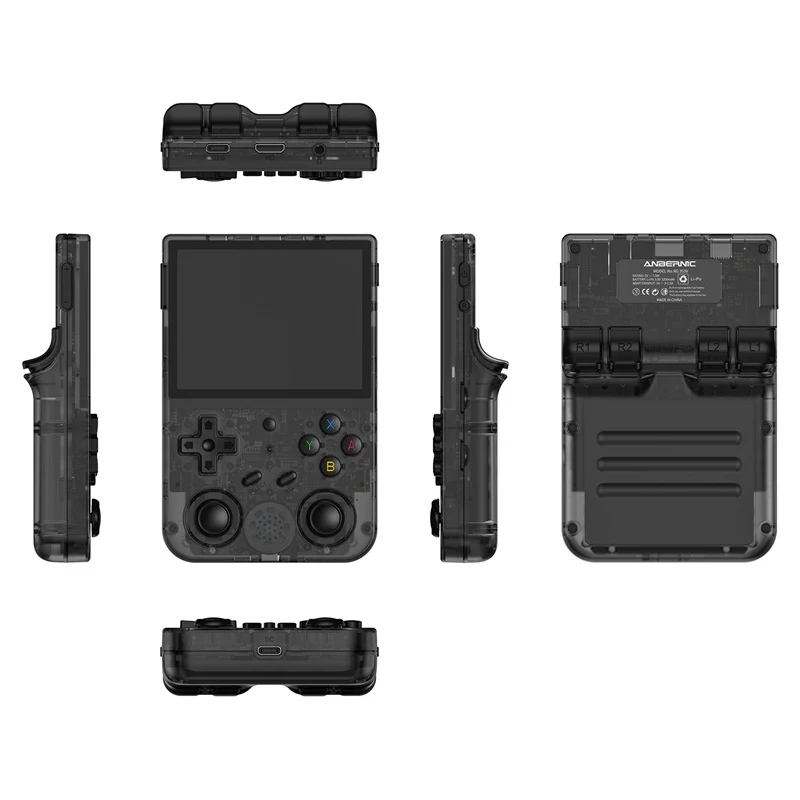
Dual-boot Linux and Android system
Smooth for PS1 and 16-bit era, DC/N64/PSP playable with tweaks
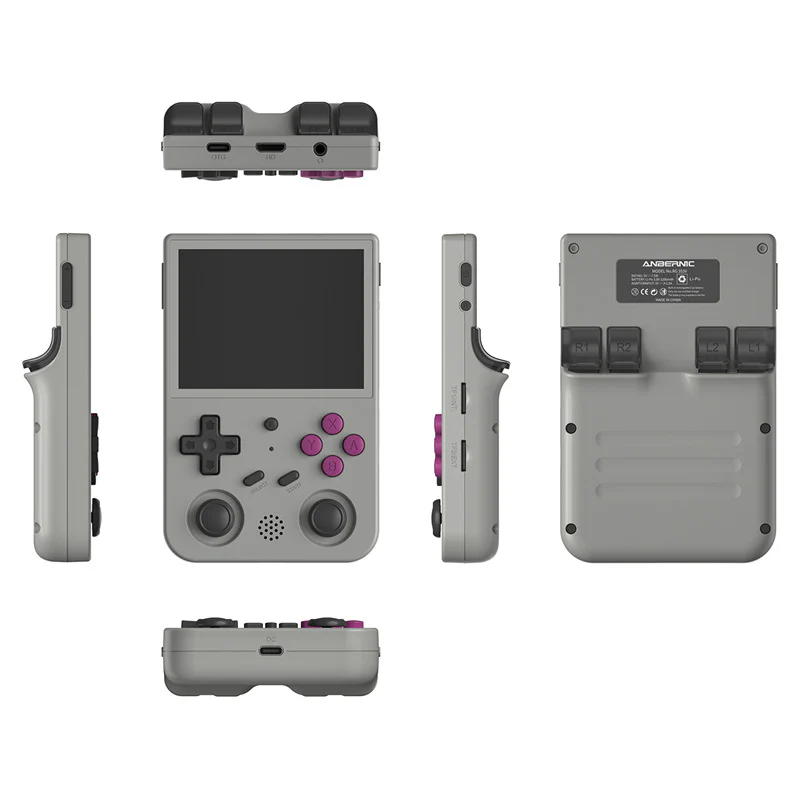
RG353V: touchscreen + 2GB RAM for versatility
RG353VS: Linux-only budget option
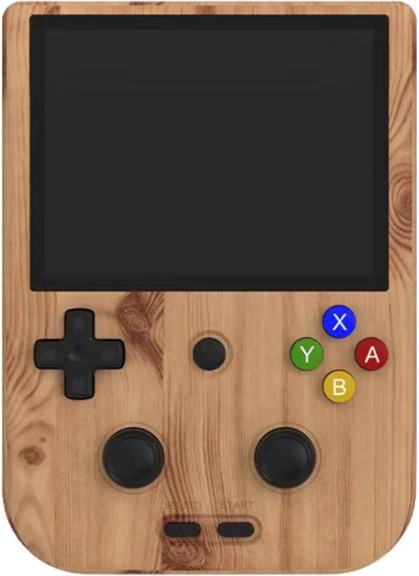
3.5-inch 640×480 IPS 4:3 screen ideal for retro
SoC: RK3566 Cortex-A55 quad-core + Mali G52 GPU
Compact ~126×83×21mm, lightweight
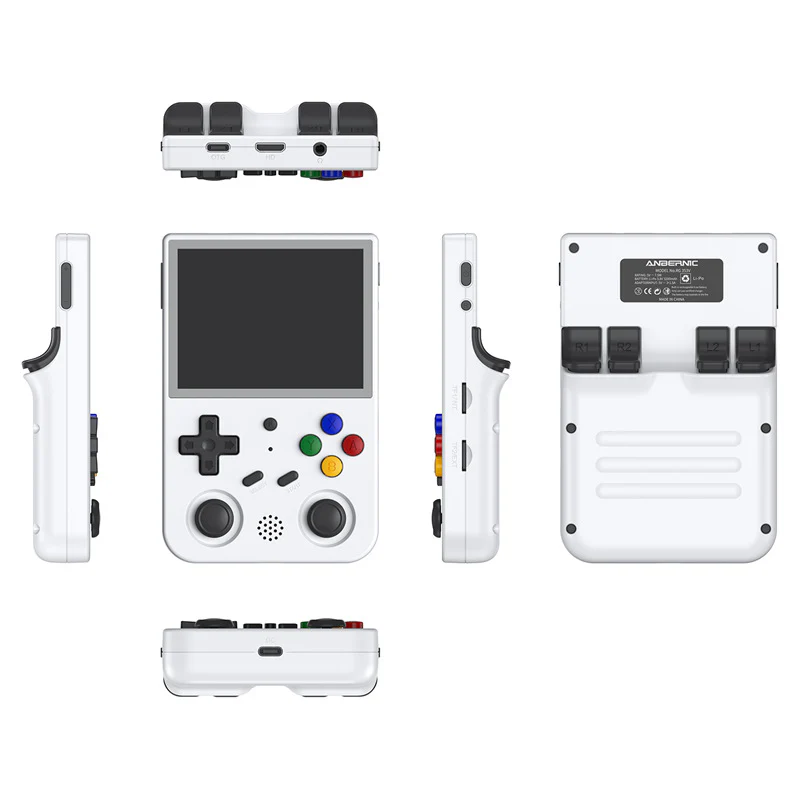
I/O: dual USB-C, miniHDMI, headphone jack, dual microSD
Front mono speaker with adequate volume
Avantages
- + 4:3 hi-res screen makes pixel art and PS1 sharp
- + Firm buttons with satisfying feedback
- + Low-profile analog sticks reduce misinputs
- + Independent L1/L2/R1/R2 improve control
- + miniHDMI supports external monitor play
- + Wi-Fi and Bluetooth enable wireless use
- + Linux offers rich customization
- + Touchscreen on RG353V enhances NDS gameplay
- + Good price/performance balance for beginners to intermediates
Inconvénients
- − Rear L2/R2 require adjustment, tricky for fighters
- − Android lacks Google Play, needs workarounds
- − PSP and heavy 3D titles stutter or need frameskip
- − Brightness too low for outdoor play
Avis
- Excellent for 8/16-bit and PS1
- N64 practical with per-title settings
- PSP smoother via Android/CFW light configs
- Dreamcast runs well at 640×480 on Linux, less stable on Android
- Saturn partially supported with CFW cores
- NDS enjoyable with RG353V’s touchscreen
- HDMI requires pre-boot on Linux, plug-and-play on Android
- CFW like ArkOS/JELOS improve usability and compatibility
Liens
Meilleurs accessoires
Loading accessories...
Performances de l'Émulateur
| Plateforme | Évaluation |
|---|---|
 Family Computer / NES
|
Jouable |
 Game Boy
|
Jouable |
 Super Famicom / SNES
|
Jouable |
 PC Engine
|
Jouable |
 Mega Drive / Sega Genesis
|
Jouable |
 Game Gear
|
Jouable |
 Game Boy Advance
|
Jouable |
 PlayStation
|
Jouable |
 Nintendo 64
|
Jouable |
 PlayStation Portable
|
Jouable |
 Dreamcast
|
Jouable |
 Nintendo DS
|
Jouable |
 Sega Saturn
|
Fonctionne |
 Nintendo GameCube
|
Non jouable |
 Wii
Wii
|
Non jouable |
 Nintendo 3DS
|
Non jouable |
 PlayStation 2
|
Non jouable |
Liens